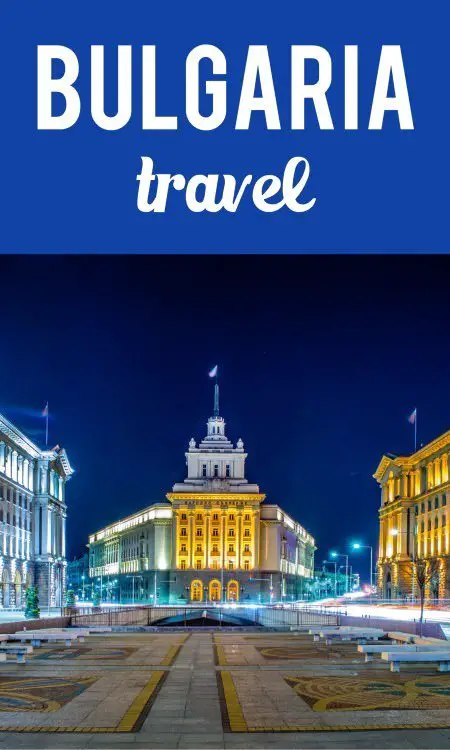
Bulgaria travel


First-class ski slopes, picturesque seaside, magic-filled mountains and crazy nightlife –- Bulgaria is becoming a hotspot in the Balkans, and according to Lonely Planet, is a top travel destination for 2011. At Indie Travel Podcast, we quite like it too.

Have questions? Chat in our Europe travel forum.

Bulgarian town square in flowers - bulgaria travel information

The Republic of Bulgaria is a small country in Eastern Europe that shares a border with Romania, Serbia, Macedonia, Greece and Turkey. The fascinating coastline on the Black Sea serves as the eastern border of the country. The official language is Bulgarian and the national currency is the lev (BGN).

A legend says that when God was creating the world, he gave a present to each country – high mountains, beautiful lakes, long coastlines etc. In the end he came to Bulgaria and found out that there was no type of present left that he had not already given to another country. So, he gave the Bulgarians a bit of everything.

And this is what Bulgaria is like today — a mixture of everything nature can offer. It has breathtaking mountains and a welcoming seaside, magnificent rose valleys and mysterious monasteries, ancient towns and modern cities. It is very likely that you will gain weight if you plan to visit Bulgarian homes, because the people are friendly and hospitable and do their best to make you feel welcome.

City focus: Sofia

Sofia, the capital of Bulgaria, is situated in the outskirts of the mountain Vitosha, whose ski slopes offer an extreme skiing experience — even at night.

The best way to explore the city is by just following the yellow-paved street. The path starts at the University of Sofia, built more than 100 years ago; after that you’ll see the parliament building, and the orthodox cathedral St. Alexander Nevski — one of the symbols of Sofia — is right behind it. Other interesting buildings along the yellow-paved street are the Russian church St. Nikolay, the palace (which is now an art gallery), the national theater Ivan Vazov and the Central Department Store.

The word “mixture” seems to be the best one to describe the atmosphere in Sofia — a combination of people, styles and architecture. The old town walls, built by the Thracians in the 7th century BC when the city was first established, stand alongside beautiful buildings proudly representing the finest period of Russian influence in Bulgaria, and next to them massive communist buildings remind of the country’s recent past. In the last few years five new shopping malls have been built in order to satisfy even the most pretentious buyer.

If you are up for a cultural experience, Sofia is the right place to be. On Rakovsky Street you will find a variety of theatres, art galleries, museums and festivals all year round. Don’t forget to visit the National Palace of Culture, where many fairs and concerts are held.

The transport network will help you reach any point of interest trouble-free, and includes two underground lines as well as many trams, buses and trolleybuses (a mix of tram and bus).

Getting to and from Bulgaria

A number of airline companies fly to Bulgaria, and recently low-cost carriers such as Wizzair and Ryanair have started operating flights to and from the country. There are four large airports in Bulgaria: in Sofia, Plovdiv, Burgas and Varna; the latter two mostly operate during the summer season. There are regular bus lines to and from the airports, and taxis to the town centre are reasonably priced.

To and From the Airport has the rundown on getting you from the airport to the city. Frequent Flyer Masters learn to earn their miles fast, and get free flights around the world.

You can also take a train or a coach to Bulgaria. The neighboring countries of Serbia, Macedonia and Turkey are not part of the EU so you will have to show your passport at the border if arriving from one of these countries.

Getting around Bulgaria

Bus

Buses are probably the best way of getting around in Bulgaria. There are many companies offering transportation and the coaches are mostly in very good condition. If you are travelling from Sofia you can check the website of the Central Coach Station for information about services.

Train

Train tickets are cheap, but the conditions inside the trains are not fantastic (hardly comparable to those of DB trains). Sleeper trains are a convenient way of travelling from Sofia to the seaside but don’t expect to sleep very much.

Car and camper rental

Traffic conditions in Bulgaria can be somewhat of a surprise. We had a horse-drawn carriage pull out from a farmyard path onto a major road right in front of us; we were quite glad the vehicle we were in had good brakes! These carriages don’t tend to use lights at night either. During winter, make sure you have suitable tyres or snow chains, as roads can become difficult or impossible to pass. Plan with the help of local advice. Get up to 25% off car rental when you pay online with Europcar.

Cycling and hiking

Cycling is a great way to discover Bulgaria but unfortunately, cycle lanes aren’t widespread. Therefore, the countryside and the mountains are the best places for cycling, and you can be sure that the views are absolutely stunning.

Plane

National flag-carrier Bulgaria Air flies limited routes with good prices if you book in advance. WizzAir flies between Sofia and Varna, prices can be slightly cheaper than Bulgaria Air. Look for current flights and pricing here.

Need more help? Ask in our Europe travel forum.

bulgarian horse in fancy dress for a festival - bulgaria travel informationcathedral at night square - bulgaria travel information

Top 10 things to do in Bulgaria

  • Go shopping. You have probably heard that when travelling on a budget in Europe you should go to the countries that don’t use the euro. Even though prices have increased considerably over the last few years, Bulgaria is still one of the cheapest destinations in Europe. Alcohol, tobacco, food and transport (especially taxis) are some of the many great bargains.
  • Ski, snowboard, slopes. If you are travelling to Bulgaria during the winter season do not miss the opportunity to put your skis on. There are a few very good ski resorts and the most famous one is Bansko, located in the southwest of the country. The prices in these resorts are considerably higher than in the countryside, but still lower than central European prices. Skiing conditions, hotels and restaurants on the other hand, are as good as anywhere in the Alps.
  • Go to the seaside. There are many interesting places to visit at the seaside — from the ultimate party destination Sunny Beach, to the historical old town in Nessebar and the camping spots in the south.
  • Experience the nightlife. In every town there are plenty of bars, clubs, piano bars and restaurants, catering to all preferences. The food and booze is quite cheap and a standard night out starts no sooner than 10pm. Be ready for a lot of dancing, singing and drinking.
  • Eat in a traditional Bulgarian restaurant. In a traditional restaurant everything is unique: the plates, the music, the order of the meals and the meals themselves. Order the shopska salat, Bulgaria’s most famous salad, and don’t forget to try the delicious salami, which goes perfectly with rakia, the famous national drink.
  • Go wine-tasting. The wine produced in Bulgaria is among the finest in Europe. There are plenty of vinarnas (wineries) in the southern and central parts of the country that organize special wine-tasting events or weekends.
  • Watch a Nestinari dance. This truly unique experience is a mixture of orthodox beliefs and old superstitious traditions which only exists in certain parts of Bulgaria and Greece. It is a barefooted dance performed on smoldering embers by special dancers called Nestinari, who are accompanied by the beat of a special drum and bagpipes. The right to perform this ritual can only be inherited, and it is believed that during the dance the performer reaches a state of trance which is why his/her feet do not burn.
  • Visit the rose festival in the valley of the roses. The rose festival is held in June in the town of Kazanlak, and it celebrates the old tradition of producing rose oil. Visit the rose fields, where a special rose-picking ritual takes place. Try the unique rose jam or the rose liquor and don’t forget to attend the street parade in Kazanlak.
  • Visit the Rila Monastery. This is one of the most beautiful monasteries in Bulgaria and the largest one in the Balkans. It is situated some 120km to the south of Sofia, in the heart of the Rila Mountain. Built in the 10th century, the monastery is an astonishing building with fantastic paintings and woodcarving.
  • Learn a word or two of Bulgarian. Now this is not going to be easy, but you can certainly give it a try. Bulgarians have a different alphabet and some of the syllables are really hard to pronounce. Most of the tourists who visit Bulgaria don’t speak the language, so the locals are always impressed when a foreigner tries to say something, even if it’s just “hello” (which is Zdrasti, for your reference).

Got more ideas? Tell us in the Europe travel forums.

This page by Steffy Dechina

Find Guidebooks

Budget Accommodation

Latest Bulgaria travel stories from Indie Travel Podcast

Bulgaria – Sofia – Internet hostel

With a cramped kitchen and common room the internet hostel has much more of a homey than a hi-tech feel to it. The old ladies that manage it and the clean dorms make this a good choice. And Dream House just downstairs…

Bulgaria – Sofia – Hostel Mostel

A big thumbs up with roomy, comfortable dorms and lounge. Free internet, lockers, breakfasts, dinners and beer definitely won Linda over.

Find Traveller's Insurance

Travel Insurance. Simple & Flexible.

Policy type

Find accommodation


Do you think information on this page is incorrect or out-of-date? Please tell us, in as much detail as possible.